Tuesday, May 17, 2011
Thoughts on Peace
"Each one has to find his peace from within."---Gandhi
"Let us forgive each other- only then will we live in peace."---Tolstoy
Wednesday, May 04, 2011
Youthful Patriots
"Went from writing my paper to watching obamas speech to crushing beers and singing springsteen in a crowd of 100 within 20 minutes. I love this country!" ---from New Hampshire.
Labels: Politics, Pop Culture, public protest, quotes
Monday, January 17, 2011
Toning down the rhetoric
King quoted John F. Kennedy, "Let us begin anew, remember on both sides that civility is not a sign of weakness, and sincerity is always subject to proof. Let us never negotiate out of fear. But let us never fear to negotiate."
Kennedy was thinking arms control, but the spirit still resonates.
King is a talented writer with a big heart.
Labels: constitutional issues, Politics, public protest, quotes, thought
Tuesday, December 14, 2010
Wikileaks
Labels: constitutional issues, quotes, technology
Monday, December 13, 2010
Sound familiar
Sound familiar and/or prescient?
Labels: economics, Politics, quotes
Tuesday, December 07, 2010
Elizabeth Edwards
Labels: 2008 presidential election, quotes, thought
Sunday, December 05, 2010
Buffett advice
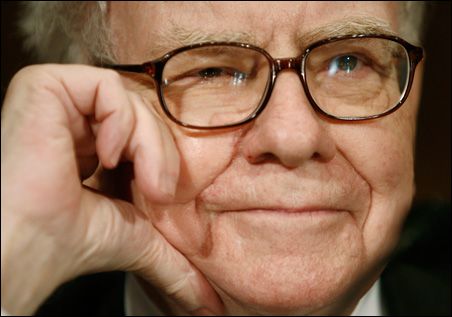
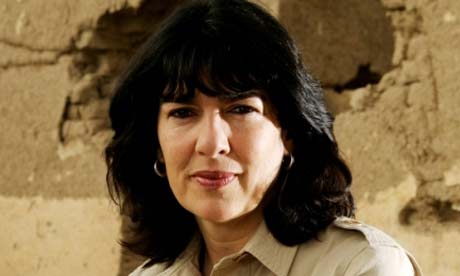
Warren Buffett last Sunday on "This Week" with Christiane Amanpour, "The rich are always going to say that, you know, just give us more money and we’ll all go out and spend more, and then it will trickle down to the rest of you. But that has not worked the last 10 years, and I hope the American public is catching on."
Labels: economics, Politics, quotes
Monday, November 08, 2010
Sound familiar
"Growing love of money, and the lust for power which followed it, engendered every kind of evil. Avarice destroyed honor, integrity and every other virtue, and instead taught men to be proud and cruel, to neglect religion, and to hold nothing too sacred to sell. Ambition tempted many to be false... At first these vices grew slowly and sometimes met with punishments; later on when the disease had spread like a plague, Rome changed: her government, once so just and admirable, became harsh and unendurable."
Labels: corruption, Politics, quotes, thought
Thursday, September 16, 2010
Don't support dependency

The Clarion Content has always been a big believer in helping folks to help themselves. Teach someone how to, provide them the resources to...the old saw is, "Give a man a fish and you feed him for a day. Teach a man to fish and you feed him for a lifetime." We ran across a terrific new quote today from this point of view.
"The risk of pity is that it kills with kindness; the promise of passion is that it builds on the hope that the poor are fully capable of helping themselves if given the chance." ---Nancy Gibbs
We ran across this quote here at a worthy charitable organization called Casa de Los Angeles.
Labels: quotes
Sunday, May 10, 2009
David Feherty on the divide


It is easy to forget in these days of Obama-mania that ex-dictator George Bush II still has many ardent supporters. Golf analyst David Feherty writing for D Magazine provided a sharp reminder. Feherty, an Irishman by birth, has been living in the Dallas area for twelve years. He has been a big supporter of American troops, visiting Iraq to entertain as well as, working with the "Troops First Foundation," which is raising $15 million for soldiers who return wounded, many of them without limbs. He created his own division -- "F Troop" -- and last year took eight soldiers to South Dakota for pheasant hunting.
The 43rd and worst president ever is moving to the Dallas area. Feherty was writing for D Magazine about the return of the bumbler. King George the II received 62 million votes in 2004. In 2008 more than 61 million people voted for a candidate other than Barack Obama. Many of those folks were vitriolically opposed to Obama or any Democratic candidate. Feherty offered a semi-kidding commentary about how, in his view, most American troops feel about Democratic politicians today,
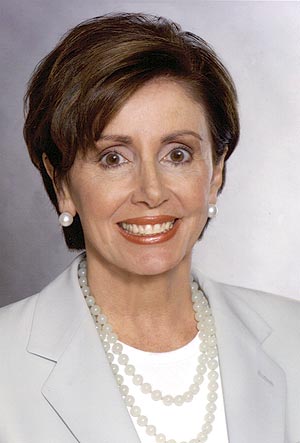
"From my own experience visiting the troops in the Middle East, I can tell you this though. Despite how the conflict has been portrayed by our glorious media, if you gave any U.S. soldier a gun with two bullets in it, and he found himself in an elevator with Nancy Pelosi, Harry Reid and Osama bin Laden, there's a good chance that Nancy Pelosi would get shot twice, and Harry Reid and bin Laden would be strangled to death."
The Clarion Content is quite cognizant that America is still a 50-50 country, starkly divided on many issues, despite the papering over supported by many in the mainstream media. The Clarion Content reads comments like Feherty's and fears the huge backlash that is likely coming if President Obama isn't a massive, and all but immediate, success.
Read more here.
Labels: 2008 presidential election, media, Politics, Predictions, quotes
Friday, April 17, 2009
Best recent vintage political one-liner
Wednesday, November 12, 2008
Obama perspective
The first is from a North Carolina delegate to the Democratic National Convention. His name is John Verdejo. He is a twenty-nine year-old, Raleigh native, from a single parent family. He was raised in the South Bronx until he was fourteen. Reacting to Obama's election Verdejo said, "[it] is going to force us to look at ourselves. We can no longer use the excuse of "because of my skin color, I can't be anything I want to be.""
The second is from a local mother of two girls, one only eight months old. The mom's name is Stacy Scott. She was quoted at a Durham, NC Obama victory rally that she attended with both kids as saying, "If he [Obama] wins tonight, if he can do this, then I can tell my kids tomorrow that anything is possible."
Labels: 2008 presidential election, facing race, Politics, quotes
Friday, November 07, 2008
Ever offensive
Labels: facing race, quotes
Thursday, October 02, 2008
Political Discourse

American political discourse is so fucked up and distorted these days that even the Sports Guy, Bill Simmons writing in ESPN the magazine felt compelled to call us out.
"Of all the things currently wrong with this country—a trillion-dollar war, a flagging real estate market, a crippled stock market, high fuel prices, Lynne Spears, the Jonas Brothers—the fact that nearly everyone with a platform is terrified to say anything might be the most depressing subplot of all. Whatever happened to freedom of speech? Hell, whatever happened to speech?"
Labels: 2008 presidential election, Politics, quotes, thought
Tuesday, September 30, 2008
Excerpts from Obama's Philadelphia 2008 speech on Race
Understanding this reality requires a reminder of how we arrived at this point. As William Faulkner once wrote, "The past isn't dead and buried. In fact, it isn't even past." We do not need to recite here the history of racial injustice in this country. But we do need to remind ourselves that so many of the disparities that exist in the African-American community today can be directly traced to inequalities passed on from an earlier generation that suffered under the brutal legacy of slavery and Jim Crow.
Segregated schools were, and are, inferior schools; we still haven't fixed them, fifty years after Brown v. Board of Education, and the inferior education they provided, then and now, helps explain the pervasive achievement gap between today's black and white students.
Legalized discrimination - where blacks were prevented, often through violence, from owning property, or loans were not granted to African-American business owners, or black homeowners could not access FHA mortgages, or blacks were excluded from unions, or the police force, or fire departments - meant that black families could not amass any meaningful wealth to bequeath to future generations. That history helps explain the wealth and income gap between black and white, and the concentrated pockets of poverty that persists in so many of today's urban and rural communities.
A lack of economic opportunity among black men, and the shame and frustration that came from not being able to provide for one's family, contributed to the erosion of black families - a problem that welfare policies for many years may have worsened. And the lack of basic services in so many urban black neighborhoods - parks for kids to play in, police walking the beat, regular garbage pick-up and building code enforcement - all helped create a cycle of violence, blight and neglect that continue to haunt us.
This is the reality in which Reverend Wright and other African-Americans of his generation grew up. They came of age in the late fifties and early sixties, a time when segregation was still the law of the land and opportunity was systematically constricted. What's remarkable is not how many failed in the face of discrimination, but rather how many men and women overcame the odds; how many were able to make a way out of no way for those like me who would come after them.
But for all those who scratched and clawed their way to get a piece of the American Dream, there were many who didn't make it - those who were ultimately defeated, in one way or another, by discrimination. That legacy of defeat was passed on to future generations - those young men and increasingly young women who we see standing on street corners or languishing in our prisons, without hope or prospects for the future. Even for those blacks who did make it, questions of race, and racism, continue to define their worldview in fundamental ways. For the men and women of Reverend Wright's generation, the memories of humiliation and doubt and fear have not gone away; nor has the anger and the bitterness of those years. That anger may not get expressed in public, in front of white co-workers or white friends. But it does find voice in the barbershop or around the kitchen table. At times, that anger is exploited by politicians, to gin up votes along racial lines, or to make up for a politician's own failings.
And occasionally it finds voice in the church on Sunday morning, in the pulpit and in the pews. The fact that so many people are surprised to hear that anger in some of Reverend Wright's sermons simply reminds us of the old truism that the most segregated hour in American life occurs on Sunday morning. That anger is not always productive; indeed, all too often it distracts attention from solving real problems; it keeps us from squarely facing our own complicity in our condition, and prevents the African-American community from forging the alliances it needs to bring about real change. But the anger is real; it is powerful; and to simply wish it away, to condemn it without understanding its roots, only serves to widen the chasm of misunderstanding that exists between the races.
In fact, a similar anger exists within segments of the white community. Most working- and middle-class white Americans don't feel that they have been particularly privileged by their race. Their experience is the immigrant experience - as far as they're concerned, no one's handed them anything, they've built it from scratch. They've worked hard all their lives, many times only to see their jobs shipped overseas or their pension dumped after a lifetime of labor. They are anxious about their futures, and feel their dreams slipping away; in an era of stagnant wages and global competition, opportunity comes to be seen as a zero sum game, in which your dreams come at my expense. So when they are told to bus their children to a school across town; when they hear that an African American is getting an advantage in landing a good job or a spot in a good college because of an injustice that they themselves never committed; when they're told that their fears about crime in urban neighborhoods are somehow prejudiced, resentment builds over time.
Like the anger within the black community, these resentments aren't always expressed in polite company. But they have helped shape the political landscape for at least a generation. Anger over welfare and affirmative action helped forge the Reagan Coalition. Politicians routinely exploited fears of crime for their own electoral ends. Talk show hosts and conservative commentators built entire careers unmasking bogus claims of racism while dismissing legitimate discussions of racial injustice and inequality as mere political correctness or reverse racism.
Just as black anger often proved counterproductive, so have these white resentments distracted attention from the real culprits of the middle class squeeze - a corporate culture rife with inside dealing, questionable accounting practices, and short-term greed; a Washington dominated by lobbyists and special interests; economic policies that favor the few over the many. And yet, to wish away the resentments of white Americans, to label them as misguided or even racist, without recognizing they are grounded in legitimate concerns - this too widens the racial divide, and blocks the path to understanding.
This is where we are right now. It's a racial stalemate we've been stuck in for years. Contrary to the claims of some of my critics, black and white, I have never been so naïve as to believe that we can get beyond our racial divisions in a single election cycle, or with a single candidacy - particularly a candidacy as imperfect as my own.
But I have asserted a firm conviction - a conviction rooted in my faith in God and my faith in the American people - that working together we can move beyond some of our old racial wounds, and that in fact we have no choice is we are to continue on the path of a more perfect union.
Labels: 2008 presidential election, facing race, quotes, thought
Monday, September 29, 2008
Excerpts from Obama's 2004 Speech to the Democratic Convention
But my grandfather had larger dreams for his son. Through hard work and perseverance my father got a scholarship to study in a magical place: America, which stood as a beacon of freedom and opportunity to so many who had come before. While studying here, my father met my mother. She was born in a town on the other side of the world, in Kansas. Her father worked on oil rigs and farms through most of the Depression. The day after Pearl Harbor he signed up for duty, joined Patton's army and marched across Europe. Back home, my grandmother raised their baby and went to work on a bomber assembly line. After the war, they studied on the GI Bill, bought a house through FHA, and moved west in search of opportunity.
And they, too, had big dreams for their daughter, a common dream, born of two continents. My parents shared not only an improbable love; they shared an abiding faith in the possibilities of this nation. They would give me an African name, Barack, or "blessed," believing that in a tolerant America your name is no barrier to success. They imagined me going to the best schools in the land, even though they weren't rich, because in a generous America you don't have to be rich to achieve your potential. They are both passed away now. Yet, I know that, on this night, they look down on me with pride.
I stand here today, grateful for the diversity of my heritage, aware that my parents' dreams live on in my precious daughters. I stand here knowing that my story is part of the larger American story, that I owe a debt to all of those who came before me, and that, in no other country on earth, is my story even possible. Tonight, we gather to affirm the greatness of our nation, not because of the height of our skyscrapers, or the power of our military, or the size of our economy. Our pride is based on a very simple premise, summed up in a declaration made over two hundred years ago, "We hold these truths to he self-evident, that all men are created equal. That they are endowed by their Creator with certain inalienable rights. That among these are life, liberty and the pursuit of happiness."
That is the true genius of America, a faith in the simple dreams of its people, the insistence on small miracles. That we can tuck in our children at night and know they are fed and clothed and safe from harm. That we can say what we think, write what we think, without hearing a sudden knock on the door. That we can have an idea and start our own business without paying a bribe or hiring somebody's son. That we can participate in the political process without fear of retribution, and that our votes will he counted - or at least, most of the time.
This year, in this election, we are called to reaffirm our values and commitments, to hold them against a hard reality and see how we are measuring up, to the legacy of our forbearers, and the promise of future generations. And fellow Americans - Democrats, Republicans, Independents - I say to you tonight: we have more work to do. More to do for the workers I met in Galesburg, Illinois, who are losing their union jobs at the Maytag plant that's moving to Mexico, and now are having to compete with their own children for jobs that pay seven bucks an hour. More to do for the father I met who was losing his job and choking back tears, wondering how he would pay $4,500 a month for the drugs his son needs without the health benefits he counted on. More to do for the young woman in East St. Louis, and thousands more like her, who has the grades, has the drive, has the will, but doesn't have the money to go to college.
Don't get me wrong. The people I meet in small towns and big cities, in diners and office parks, they don't expect government to solve all their problems. They know they have to work hard to get ahead and they want to. Go into the collar counties around Chicago, and people will tell you they don't want their tax money wasted by a welfare agency or the Pentagon. Go into any inner city neighborhood, and folks will tell you that government alone can't teach kids to learn. They know that parents have to parent, that children can't achieve unless we raise their expectations and turn off the television sets and eradicate the slander that says a black youth with a book is acting white. No, people don't expect government to solve all their problems. But they sense, deep in their bones, that with just a change in priorities, we can make sure that every child in America has a decent shot at life, and that the doors of opportunity remain open to all. They know we can do better. And they want that choice.
...........alongside our famous individualism, there's another ingredient in the American saga.
A belief that we are connected as one people. If there's a child on the south side of Chicago who can't read, that matters to me, even if it's not my child. If there's a senior citizen somewhere who can't pay for her prescription and has to choose between medicine and the rent, that makes my life poorer, even if it's not my grandmother. If there's an Arab American family being rounded up without benefit of an attorney or due process, that threatens my civil liberties. It's that fundamental belief - I am my brother's keeper, I am my sister's keeper - that makes this country work. It's what allows us to pursue our individual dreams, yet still come together as a single American family. "E pluribus unum." Out of many, one.
Yet even as we speak, there are those who are preparing to divide us, the spin masters and negative ad peddlers who embrace the politics of anything goes. Well, I say to them tonight, there's not a liberal America and a conservative America - there's the United States of America. There's not a black America and white America and Latino America and Asian America; there's the United States of America. The pundits like to slice-and-dice our country into Red States and Blue States; Red States for Republicans, Blue States for Democrats. But I've got news for them, too. We worship an awesome God in the Blue States, and we don't like federal agents poking around our libraries in the Red States. We coach Little League in the Blue States and have gay friends in the Red States. There are patriots who opposed the war in Iraq and patriots who supported it. We are one people, all of us pledging allegiance to the stars and stripes, all of us defending the United States of America.
Do we participate in a politics of cynicism or a politics of hope?....I'm not talking about blind optimism here - the almost willful ignorance that thinks unemployment will go away if we just don't talk about it, or the health care crisis will solve itself if we just ignore it. No, I'm talking about something more substantial. It's the hope of slaves sitting around a fire singing freedom songs; the hope of immigrants setting out for distant shores....the hope of a skinny kid with a funny name who believes that America has a place for him, too. The audacity of hope!
In the end, that is God's greatest gift to us, the bedrock of this nation; the belief in things not seen; the belief that there are better days ahead. I believe we can give our middle class relief and provide working families with a road to opportunity. I believe we can provide jobs to the jobless, homes to the homeless, and reclaim young people in cities across America from violence and despair. I believe that as we stand on the crossroads of history, we can make the right choices, and meet the challenges that face us.
Labels: 2008 presidential election, quotes, thought
Thursday, September 25, 2008
One more on War

"May it be thy will to remove war and bloodshed from the world and perpetuate the wonders and greatness of peace. All the inhabitants of the world shall recognize and know the truth: that we have not been placed on this earth to wage war and not for hatred or bloodshed."---Rabbi Nachman of Breslav
Wednesday, September 24, 2008
Food for thought on War

"Everything is very simple in war, but the simplest thing is difficult. These difficulties accumulate and produce a friction, which no man can imagine exactly who has not seen war." ---Carl Von Clausewitz, On War
"But CENTCOM had not developed a plan for conventional ground operations in Afghanistan. Nor had diplomatic arrangements for basing, staging, overflight and access been made with Afghanistan's neighbors. There simply had been no stomach in Washington for sustained face-to-face combat in this remote primitive, landlocked country halfway around the world-no stomach since at least 1993.
From Hugh Shelton's tone, it was clear that this was about to change. America's military was going to war in a country where twenty-some years earlier the Soviet Union had invested 620,000 men over the course of eleven years, at a cost of more than 15,000 killed and almost 55,000 wounded." ---General Tommy Franks, American Soldier
"Bobby soon learns the trick that his father and his uncles and his grandfather all knew, which is that you never talk about the specifics of what happened over there. No one wants to hear about how you dug half of your buddy's molars out of your leg with the point of a bayonet." ---Neal Stephenson, Cryptonomicon
"...they have been getting bombed a lot. Even if the shrapnel misses you, the bomb's shock wave is like a stone wall moving at seven hundred miles an hour. Unlike a stone wall, it passes through your body, like a burst of light through a glass figurine. On its way through your flesh, it rearranges every part of you down to the mitochondrial level, disrupting every process in every cell, including whatever enables your brain to keep track of time and experience the world. A few of these detonations are enough to break the thread of consciousness into a snarl of tangled and chopped filaments. These men are not as human as they were when they left home; they cannot be expected to think clearly or do things for good reasons." ---Neal Stephenson, Cryptonomicon
"The trail was perhaps a hundred meters from the woodline, and in a matter of minutes we found the bodies. The first dink's brains were sticking out from the side of his head; now I knew why the brain is referred to as gray matter. I wondered what would happen if the skull was hit with a blunt object and the brain wasn't there to absorb the impact. With the butt of my M-16 I smacked the dink's head. The skull cracked like the head of a plastic doll. That was so neat that I gave him one more. As I looked down on the now grotesque face, I thought it would be neat to reach down and grab the brain to show the guys back at the compound, but on second thought I decided not to.
What would ever possess me to do something like that to a corpse? God only knows. I felt no remorse for the gook. He was dead and I was alive, that's the way it was." ---John L. Rotundo, Charlie Rangers
Wednesday, September 17, 2008
48 days to the election

The elections are coming.
With that in mind, a thought from Edward Bernays...“The conscious and intelligent manipulation of the organized habits and opinions of the masses is an important (though little known or realized) element in a democratic society. Those who manipulate this unseen mechanism of society constitute an invisible government, which is the true ruling power of our country. ...We are governed, our minds are molded, our tastes formed, our ideas suggested, largely by men (that) we have never heard of. This is a logical result of the way in which our democratic society is organized. Vast numbers of human beings must cooperate in this manner if they are to live together as a smoothly functioning society. ...In almost every act of our daily lives, whether in the sphere of politics or business, in our social conduct or our ethical thinking, we are dominated by the relatively small number of persons... who understand the mental processes and social patterns of the masses. It is they who pull the wires (strings or levers) which control the public mind.”
Labels: 2008 presidential election, quotes
Wednesday, September 03, 2008
Political Quip of the Week

Alaska Governor Sarah Palin got off a beauty of a line last night in her speech to the Republican National Convention in Minnesota.
"In politics, there are some candidates who use change to promote their careers. And then there are those, like John McCain, who use their careers to promote change."
Hey maybe it wasn't totally fair, but it sure was a well written turn of phrase. Palin was, of course, hailed by the staged audience of the convention, but her speech was indeed tightly constructed and rousingly delivered.
Labels: 2008 presidential election, Politics, quotes
