Friday, July 27, 2012
CompostNow debuts in Durham
A fantastic new service called CompostNow has debuted in Durham and the surrounding area. A tip of the hat to a fellow member of the Watts-Hillandale Neighborhood Association for sending this our way. They heard about them through the ahead the curve cats over at Bull City Forward.

For $25 a month, CompostNow provides a homeowner with a composting bin; you fill it up, they pick it up, once a week. Homeowners then have the option of having the resulting nutrient-rich, garden-ready compost delivered to them whenever and wherever at no extra charge. Or, CompostNow members can also choose to donate the compost to a local community garden of their choice.
For $25 a month, CompostNow provides a homeowner with a composting bin; you fill it up, they pick it up, once a week. Homeowners then have the option of having the resulting nutrient-rich, garden-ready compost delivered to them whenever and wherever at no extra charge. Or, CompostNow members can also choose to donate the compost to a local community garden of their choice.
Labels: Durham, ecology, Practical Advice, science
Monday, June 25, 2012
Alan Turing's Birthday
It was the late, great, Alan Turing's birthday this weekend. Turing was a polymath and a genius from whose mind spawned the connection to binary logic that enabled the computer to move from concept to reality. He made computers happen. Turing also contributed the test that is still used to determine artificial or machine intelligence.1 He broke the Axis's secret codes and helped turn the tide of World War II. He paved the way mathematically for both chaos and complexity theory.

My what British teeth you have, Dr. Turing...
Tragically, one of the great minds of the 20th century was hounded and harassed until his untimely death at the age of only forty-two. Don't let anyone tell you that prejudice is anything but societal self-sabotage.2 Read some of what this man accomplished and ask yourself what else he might have done for the world if he hadn't been stigmatized, derided and attacked for his sexuality.
Inane.
Gay is not an insult.
Notes
1At the Clarion Content this weekend, we saw another great example of how machine intelligence fails to match human intelligence at the most fundamental levels. Shazam, one of our favorite iPhone apps, struggles with classical music recognition. Shazam is genius when it comes to looking up pop tunes. Hold your phone up to the music playing and it can identify the artist and title track almost every time. But it is not intelligent like a human, it does not recognize tunes. Classical music kicks its proverbial butt.
For example, the ditty playing is the 1812 Overture, if Shazam knows that particular version by that particular orchestra, bam, it has your back and can identify it just like a top-40 tune: the 1812 Overture by the Academy of St. Martin in the Fields.
But if it does not know that recording, it is not intelligent like a human, it does not know the tune. It cannot say, well, that is the 1812 Overture or Beethoven's 5th Symphony, even though I, Shazam, can't identify who is playing it, the music, the notes are quite familiar. No, for the binary machine it is all or nothing. No nuance. No AI.
2Prejudice is societal self-sabotage.
My what British teeth you have, Dr. Turing...
Tragically, one of the great minds of the 20th century was hounded and harassed until his untimely death at the age of only forty-two. Don't let anyone tell you that prejudice is anything but societal self-sabotage.2 Read some of what this man accomplished and ask yourself what else he might have done for the world if he hadn't been stigmatized, derided and attacked for his sexuality.
Inane.
Gay is not an insult.
Notes
1At the Clarion Content this weekend, we saw another great example of how machine intelligence fails to match human intelligence at the most fundamental levels. Shazam, one of our favorite iPhone apps, struggles with classical music recognition. Shazam is genius when it comes to looking up pop tunes. Hold your phone up to the music playing and it can identify the artist and title track almost every time. But it is not intelligent like a human, it does not recognize tunes. Classical music kicks its proverbial butt.
For example, the ditty playing is the 1812 Overture, if Shazam knows that particular version by that particular orchestra, bam, it has your back and can identify it just like a top-40 tune: the 1812 Overture by the Academy of St. Martin in the Fields.
But if it does not know that recording, it is not intelligent like a human, it does not know the tune. It cannot say, well, that is the 1812 Overture or Beethoven's 5th Symphony, even though I, Shazam, can't identify who is playing it, the music, the notes are quite familiar. No, for the binary machine it is all or nothing. No nuance. No AI.
2Prejudice is societal self-sabotage.
Labels: Ethically questionable, science, technology
Thursday, June 21, 2012
Sol Food Mobile Farm: Leaves Durham
Have you heard about the Sol Food Mobile Farm?
If not, you should.
It is one more fabulous, innovative, concerned group of Durham citizens. Four Durham School of the Arts graduates, Eliza Bordley, Reid Rosemond, Ellen Duda and Dylan Hammond are taking a biofuel1 powered bus that they converted on a six month, 9,000 mile, nationwide tour. They are fiscally supported by Zomppa, a food education and advocacy non-profit(and your Kickstarter cash).

This is the roof of the bus...
It is planted as part of a scheme to regulate the temperature inside the vehicle.
Photo credit Scenes from my Lunch Hour
The Clarion Content sat down with this fascinating foursome for an interview yesterday, on the bus that will serve as their home and sleeping quarters, as they prepared to embark on their nationwide tour. They depart from their south central Durham farm base today, first stop Asheville.
Their journey will include ten workshops and as many fifty expos. It is a non-paying gig so the group will be working as many farm trades, farm stays, and farmer's markets as they can. They will also be growing herbs, vermacomposting and stocking up on staples like beans, corn meal and polenta as they hit the road.
During their workshops they will construct community gardens with local children and interested adults. The Sol Food Farm team already has experience in this arena. They partnered with several Durham school of the Arts teachers, including another DSA alum and high school pal, Victor Cadilla, now a DSA history teacher, to found the school's Urban Farm Club. Together with students they built eight raised beds and planted an herb and vegetable garden.
The Sol Food team has amazing plans. They are headed for some fantastic destinations and wonderful collaborations, including, in Maine with renown agricultural researcher and educator, Elliot Coleman, author of The Four Season Harvest.
One of their goals is to bring the message to adults and kids alike that local agriculture exists. Urban farming is possible. Food does not have to be massed produced and shipped across country. As Rosemond put it, "We are doing it out love, it is what we are into."
They are also partnering with an incredible Durham start-up called In R Food that analyzes, among many other things, the distance a product has traveled to market, what's in it and what are the locally produced alternatives.

Left to right Ellen Duda, Dylan Hammond, Eliza Bordley and Reid Rosemond.
Photo credit Scenes from my Lunch Hour
Durham, you never cease to amaze.
Sol Food Mobile Farm will be filing more dispatches from the road. We wish them well. The Clarion Content will keep you updated on their fabulous journey. We will be running a full length feature on the crew, their bus and the mission next week. Stay tuned.
For now, check out more pictures of the Sol Food Mobile Farm bus and crew at Scenes from my Lunch Hour.
Notes
1 Technically waste vegetable oil, which is even better than a many a regular biofuel, because it never goes through processing, it just goes straight from the restaurant's fryer into the fuel tanks.
If not, you should.
It is one more fabulous, innovative, concerned group of Durham citizens. Four Durham School of the Arts graduates, Eliza Bordley, Reid Rosemond, Ellen Duda and Dylan Hammond are taking a biofuel1 powered bus that they converted on a six month, 9,000 mile, nationwide tour. They are fiscally supported by Zomppa, a food education and advocacy non-profit(and your Kickstarter cash).
This is the roof of the bus...
It is planted as part of a scheme to regulate the temperature inside the vehicle.
Photo credit Scenes from my Lunch Hour
The Clarion Content sat down with this fascinating foursome for an interview yesterday, on the bus that will serve as their home and sleeping quarters, as they prepared to embark on their nationwide tour. They depart from their south central Durham farm base today, first stop Asheville.
Their journey will include ten workshops and as many fifty expos. It is a non-paying gig so the group will be working as many farm trades, farm stays, and farmer's markets as they can. They will also be growing herbs, vermacomposting and stocking up on staples like beans, corn meal and polenta as they hit the road.
During their workshops they will construct community gardens with local children and interested adults. The Sol Food Farm team already has experience in this arena. They partnered with several Durham school of the Arts teachers, including another DSA alum and high school pal, Victor Cadilla, now a DSA history teacher, to found the school's Urban Farm Club. Together with students they built eight raised beds and planted an herb and vegetable garden.
The Sol Food team has amazing plans. They are headed for some fantastic destinations and wonderful collaborations, including, in Maine with renown agricultural researcher and educator, Elliot Coleman, author of The Four Season Harvest.
One of their goals is to bring the message to adults and kids alike that local agriculture exists. Urban farming is possible. Food does not have to be massed produced and shipped across country. As Rosemond put it, "We are doing it out love, it is what we are into."
They are also partnering with an incredible Durham start-up called In R Food that analyzes, among many other things, the distance a product has traveled to market, what's in it and what are the locally produced alternatives.
Left to right Ellen Duda, Dylan Hammond, Eliza Bordley and Reid Rosemond.
Photo credit Scenes from my Lunch Hour
Durham, you never cease to amaze.
Sol Food Mobile Farm will be filing more dispatches from the road. We wish them well. The Clarion Content will keep you updated on their fabulous journey. We will be running a full length feature on the crew, their bus and the mission next week. Stay tuned.
For now, check out more pictures of the Sol Food Mobile Farm bus and crew at Scenes from my Lunch Hour.
Notes
1 Technically waste vegetable oil, which is even better than a many a regular biofuel, because it never goes through processing, it just goes straight from the restaurant's fryer into the fuel tanks.
Labels: Durham, ecology, economics, energy policy, food, Living things, science
Friday, May 04, 2012
Super Moon Saturday
The biggest full moon of the year for the Northern Hemisphere is coming this weekend. Saturday night is what is commonly referred to as the "Supermoon." This results when the moon's perigee coincides with a full moon, like it does this month. In this case the perigee, the point in an orbit where the orbiting body is closest to the body it orbits, is the nearest to Earth the moon will be at any time this year.

We believe it should look something like this...
SPACE.com's skywatching columnist, Joe Rao, says that this happens because the moon's orbit is not perfectly circular. This month's full moon is due to be about 16 percent brighter than average. Although there is no obvious scientific cause for alarm or disquiet, SPACE.com does note that, "normal tides around the world will be particularly high and low. At perigee, the moon will exert about 42 percent more tidal force than it will during its next apogee two weeks later."
They also suggest, "To view this weekend's supermoon to best effect, look for it just after it rises or before it sets, when it is close to the horizon. There, you can catch a view of the moon behind buildings or trees, an effect which produces an optical illusion, making the moon seem even larger than it really is."
Read the whole article here.
We believe it should look something like this...
SPACE.com's skywatching columnist, Joe Rao, says that this happens because the moon's orbit is not perfectly circular. This month's full moon is due to be about 16 percent brighter than average. Although there is no obvious scientific cause for alarm or disquiet, SPACE.com does note that, "normal tides around the world will be particularly high and low. At perigee, the moon will exert about 42 percent more tidal force than it will during its next apogee two weeks later."
They also suggest, "To view this weekend's supermoon to best effect, look for it just after it rises or before it sets, when it is close to the horizon. There, you can catch a view of the moon behind buildings or trees, an effect which produces an optical illusion, making the moon seem even larger than it really is."
Read the whole article here.
Labels: science
Thursday, April 12, 2012
Engineering World Health fundraiser
Friends of the Clarion Content, Engineering World Health are holding their annual fundraiser all day this Thursday at Alivia's bistro on the corner of Gregson and West Main Streets.
Engineering World Health is a good cause. It is a non-profit that mobilizes the biomedical engineering community to improve the quality of health care in hospitals that serve the poorest communities of the developing world.

For example, after the devastating earthquake that struck Haiti recently, Engineering World Health gathered teams of biomedical engineers to fly into the country immediately to begin repairing hospital instruments and equipment.
They also, through a network of university-based chapters and contract with Duke University, manage summer programs that send student biomedical engineers to developing country hospitals where they help with repairs, upfits and new installations.
Engineering World Health also sponsors continuing education training sessions on biomedical equipment technology in lesser developed countries, as well as science seminars right here in North Carolina designed to increase science, technology, engineering, and mathematics literacy and enthusiasm among our k-12 students.
A portion of all food and drink sales from Alivia's Thursday will be donated to Engineering World Health. There will be a silent auction from 6pm to 9 pm with some really good prizes, including gift certificates to local restaurants, a weekend get-a-way at the Grove Park Inn, dance lessons and more.
So come out to Alivia's this Thursday to support a good cause.
Engineering World Health is a good cause. It is a non-profit that mobilizes the biomedical engineering community to improve the quality of health care in hospitals that serve the poorest communities of the developing world.
For example, after the devastating earthquake that struck Haiti recently, Engineering World Health gathered teams of biomedical engineers to fly into the country immediately to begin repairing hospital instruments and equipment.
They also, through a network of university-based chapters and contract with Duke University, manage summer programs that send student biomedical engineers to developing country hospitals where they help with repairs, upfits and new installations.
Engineering World Health also sponsors continuing education training sessions on biomedical equipment technology in lesser developed countries, as well as science seminars right here in North Carolina designed to increase science, technology, engineering, and mathematics literacy and enthusiasm among our k-12 students.
A portion of all food and drink sales from Alivia's Thursday will be donated to Engineering World Health. There will be a silent auction from 6pm to 9 pm with some really good prizes, including gift certificates to local restaurants, a weekend get-a-way at the Grove Park Inn, dance lessons and more.
So come out to Alivia's this Thursday to support a good cause.
Thursday, April 05, 2012
Ocean Currents
Billed as better than a Van Gogh, this fascinating NASA animation of the world's ocean currents, and the oceans' topography, give the viewer a window to reflect on the complexity of our planet.
It makes you wonder about everything affected by the oceans' movements from navigation to the weather, the net number of valuables involved, boggling.
from NASA/Goddard Space Flight Center Scientific Visualization Studio
It makes you wonder about everything affected by the oceans' movements from navigation to the weather, the net number of valuables involved, boggling.
from NASA/Goddard Space Flight Center Scientific Visualization Studio
Labels: science
Sunday, March 25, 2012
James Cameron: Under the sea
To boldly go where no man has gone before; two of the important people in the life of our editor-in-chief are watching far too much Star Trek. We can't get with it, but nor can we completely tune it out. So those words have been echoing around the empty cavern between the ears for days on end, only to resonate last night with an actual, this worldly mission.
Director James Cameron was boldly attempting to go where no man has gone before, at least for the last fifty years, the deepest bottom of the ocean floor. Cameron, uber-rich, financed an exhibition and the building of complete new deep sea submersible with Rolex and National Geographic as sponsors.
He then dove solo to 35,756 feet (10,898 meters). No one has been that deep in the ocean since US Navy Lieutenant Don Walsh and Swiss oceanographer Jacques Piccard in 1960 aboard the Trieste.

This was the last manned craft to descend to more than 6.5 miles to the deepest ocean floor.
Cameron, descending in what he describes as a torpedo-like vehicle, is filming a documentary about his journey. The BBC reports the craft weighs 11 tons and is more than 23 feet long. It is equipped with so many lights and cameras that it is like an underwater television studio.
Read more and see some fascinating video here from the BBC.
Director James Cameron was boldly attempting to go where no man has gone before, at least for the last fifty years, the deepest bottom of the ocean floor. Cameron, uber-rich, financed an exhibition and the building of complete new deep sea submersible with Rolex and National Geographic as sponsors.
He then dove solo to 35,756 feet (10,898 meters). No one has been that deep in the ocean since US Navy Lieutenant Don Walsh and Swiss oceanographer Jacques Piccard in 1960 aboard the Trieste.
This was the last manned craft to descend to more than 6.5 miles to the deepest ocean floor.
Cameron, descending in what he describes as a torpedo-like vehicle, is filming a documentary about his journey. The BBC reports the craft weighs 11 tons and is more than 23 feet long. It is equipped with so many lights and cameras that it is like an underwater television studio.
Read more and see some fascinating video here from the BBC.
Labels: Pop Culture, science
Tuesday, March 20, 2012
You had to know; Einstein

You had to know last year when European scientists claimed that they had found particles that could travel faster than the speed of light to be suspicious. After all claims of blowing fundamental scientific principles out of the water appear far more often than things that really upend what is considered scientific "law."
Now the Euro (French and Italian) eggheads are backing off their experimental results and admitting that they could have been caused by a loose cable. There is still hope for you time travelers, recall Einstein's theory of special relativity augurs that going faster than the speed of light would be equivalent to going backward in time.
French and Italian scientists confessed on a website run by the American Association for the Advancement of Science, that the result might be due to a loose fibre optic cable linking a Global Positioning System satellite receiver to a computer or perhaps a malfunctioning clock, neutrinos were beamed and timed from the CERN facility in Geneva to a lab near Rome.
Either way, as Edward Blucher, chairman of the Department of Physics at the University of Chicago, told Reuters, "I don't think I met anyone who said I bet it's going to be true. I think the people on the experiment worked as carefully as they could and I think they ran out of ideas of what could be wrong and they decided to present. Maybe they should have waited a few more months."
Read more here and here.
Labels: science
Wednesday, November 16, 2011
Things that make you go, hmmmm...
Long time readers know, that the Clarion Content is fascinated by the blurry lines separating the realms of the real and the imaginary. This means we are fans of both science and science fiction. We are glad when the real world smacks us in the face with the old proverb, there is more to this here than meets the eye.
This side by photo, maybe not so new to you, but new to the Clarion Content's editors made us stop and go, hmmmm...

This side by photo, maybe not so new to you, but new to the Clarion Content's editors made us stop and go, hmmmm...
Labels: photos, science, thought
Wednesday, March 09, 2011
Deviation from the mean
Reprinted, originally published, February 2010

As long time readers of the Clarion Content know we are not believers in a bright line standard that delineates crazy from sane. Life is cast hues. It was then we read with great interest, and a tremble that fluttered between nervous laughter and real trepidation, an article in the New York Times about The fifth edition of the Diagnostic and Statistical Manual of Mental Disorders.
This book, last revised sixteen years ago, is what its title purports, the handbook of what the profession of psychiatry considers crazy. The New York Times quotes Dr. Michael First, a professor of psychiatry at Columbia University who edited the fourth edition of the manual, "Anything you put in that book, any little change you make, has huge implications not only for psychiatry but for pharmaceutical marketing, research, for the legal system, for who’s considered to be normal or not, for who’s considered disabled."
One book to rule them all, One book to define them,
One book to cast them all and in the darkness bind them.
Not surprisingly when this is the scenario, the manual and its contents have been the subject of intense lobbying efforts. One significant change being recommended according to the Times is adding a childhood disorder called temper dysregulation disorder with dysphoria, a move that grew out of recent findings that many wildly aggressive, irritable children who have been given a diagnosis of bipolar disorder do not have it. Sounds to the Clarion Content like trying to take two wrongs and produce a right; bad idea. The Times reports, "The misdiagnosis led many children to be given powerful antipsychotic drugs, which have serious side effects, including metabolic changes...there have been widespread reports that doctors promoting the diagnosis received consulting and speaking fees from the makers of the drugs."
The urge to label and stereotype is a powerful human desire. The unknown is fearful and threatening, people who do not behave as expected even more so. In an existence limited and capped by looming mortality, uncertainty produces angst. Pigeonholing and defining the "other" give a sense of security. What is known is in the realm of what has been conquered. Humanity has explored the planet to near its ends, gaining great comfort in knowing more about what exists. With the exploration of terra firma nearly complete, societally we have turned the lens inward.
The Clarion Content cannot hold with the kind of labeling that this manual of psychiatry implies. Our understanding of the metaverse believes that this sort categorizing falls somewhere between repugnant and unhelpful. While not entirely false, stereotypes contain tropes that repeatedly misdefine and misunderstand individuals. The shrinks try to account for this type of critique by using scales of severity, from mild to severe, and rating symptoms. This attempt seems paradoxical to the Clarion Content. When labeling fails to address the specificity and uniqueness of the underlying individual cases, how does more labeling appear to be the answer? At what point do the categories lose meaning? Could we not rate every human being to be their own unique combination of characteristics? The fallacy of treating the mind like other physical ailments of the body becomes more ludicrous with every passing year. In our view the direction we should be proceeding is to examine the physical ailments of the body as things that can be treated and ameliorated by processes within our own minds.
The best treatments, mental and physical, imply an acceptance of our individuality and uniqueness however threatening it might be.
As long time readers of the Clarion Content know we are not believers in a bright line standard that delineates crazy from sane. Life is cast hues. It was then we read with great interest, and a tremble that fluttered between nervous laughter and real trepidation, an article in the New York Times about The fifth edition of the Diagnostic and Statistical Manual of Mental Disorders.
This book, last revised sixteen years ago, is what its title purports, the handbook of what the profession of psychiatry considers crazy. The New York Times quotes Dr. Michael First, a professor of psychiatry at Columbia University who edited the fourth edition of the manual, "Anything you put in that book, any little change you make, has huge implications not only for psychiatry but for pharmaceutical marketing, research, for the legal system, for who’s considered to be normal or not, for who’s considered disabled."
One book to rule them all, One book to define them,
One book to cast them all and in the darkness bind them.
Not surprisingly when this is the scenario, the manual and its contents have been the subject of intense lobbying efforts. One significant change being recommended according to the Times is adding a childhood disorder called temper dysregulation disorder with dysphoria, a move that grew out of recent findings that many wildly aggressive, irritable children who have been given a diagnosis of bipolar disorder do not have it. Sounds to the Clarion Content like trying to take two wrongs and produce a right; bad idea. The Times reports, "The misdiagnosis led many children to be given powerful antipsychotic drugs, which have serious side effects, including metabolic changes...there have been widespread reports that doctors promoting the diagnosis received consulting and speaking fees from the makers of the drugs."
The urge to label and stereotype is a powerful human desire. The unknown is fearful and threatening, people who do not behave as expected even more so. In an existence limited and capped by looming mortality, uncertainty produces angst. Pigeonholing and defining the "other" give a sense of security. What is known is in the realm of what has been conquered. Humanity has explored the planet to near its ends, gaining great comfort in knowing more about what exists. With the exploration of terra firma nearly complete, societally we have turned the lens inward.
The Clarion Content cannot hold with the kind of labeling that this manual of psychiatry implies. Our understanding of the metaverse believes that this sort categorizing falls somewhere between repugnant and unhelpful. While not entirely false, stereotypes contain tropes that repeatedly misdefine and misunderstand individuals. The shrinks try to account for this type of critique by using scales of severity, from mild to severe, and rating symptoms. This attempt seems paradoxical to the Clarion Content. When labeling fails to address the specificity and uniqueness of the underlying individual cases, how does more labeling appear to be the answer? At what point do the categories lose meaning? Could we not rate every human being to be their own unique combination of characteristics? The fallacy of treating the mind like other physical ailments of the body becomes more ludicrous with every passing year. In our view the direction we should be proceeding is to examine the physical ailments of the body as things that can be treated and ameliorated by processes within our own minds.
The best treatments, mental and physical, imply an acceptance of our individuality and uniqueness however threatening it might be.
Labels: Language, science, thought
Sunday, February 27, 2011
Record Lows

As long time readers know, the Clarion Content is not a believer that global warming will destroy the world. Our initial frame of reference was the Club of Rome Report and Ehrlich & Ehrlich. We have pretty much passed the panic stage and moved on to a serene, well, these things happen over geological scales of time. We do believe to the extent global warming manifests itself in our lifetime it will be in the form of weather turbulence and extreme events. (These are real, with human and economic costs, and are not to be taken lightly.)
We are, indeed, fond of chronicling those extraordinary weather events here at the Clarion Content. The latest such moment in time we have read about took place in the San Francisco Bay Area last week. There was snow, at least in the Twin Peaks area of the city of San Francisco, where elevations are about 900 feet above sea level. It was only a dusting though, so it won't count as the first measurable snowfall in the city in thirty-five years.
There were record low temperatures recorded throughout the area. San Francisco got down to 37 degrees, which tied the previous cold weather record for the date set in 1962. Oakland got down to 34 degrees, breaking a record set in 1987 and San Jose tied a record low of 33 degrees, set way back in 1897. Read the whole story here.
Labels: science
Tuesday, December 14, 2010
The last 200 years, health and wealth
The amazing video plots over 130,000 points of data graphically to look at trends in health and wealth over the last 200 years. Quite worthwhile.
Credit to our friends over at the MEP Report where we discovered this video.
Credit to our friends over at the MEP Report where we discovered this video.
Labels: Africa, Economy, Europe, science, technology, thought
Thursday, December 09, 2010
More Gaian evidence

The Clarion Content is an unabashed support of the Gaia theory. We read several years back about work being done on parasitic worms, the human digestive tract and autoimmune disorders. The basic premise being that when human's used to spend a lot less time and energy sanitizing our food, we were a lot less susceptible to autoimmune disorders.
Naturally, this struck our Gaian heart as a likely candidate for a symbiotic relationship. Research has increasing born this theory out, although it is still highly controversial in the United States. Parasitic worms (likely worms in general) carry connotations far beyond the more common archetypes of natural healing; we are not talking wheat grass shots, yoga or even acupuncture here. We are talking extracting roundworm eggs from the stool of an eleven year-old infected girl, cleaning them and eating them. Or putting hookworm larva on a patient's arm so they burrow through the skin enter the bloodstream and make their way into one's intestines.
Yet the results have been compelling. Many of the Man's pigeons pooh-pooh evidence found on blogs. Read then an amazing tale on CNN backing the theories originally popularized by Dr. Joel Weinstock, chief of gastroenterology at Tufts University Medical School.
Humans lived with worms in our intestines for thousands, if not hundreds of thousands of years. Is it really so odd that our bodies and theirs learned to work together?
Labels: ecology, health, Pop Culture, science, technology
Monday, November 29, 2010
Monty Burns frog

An expedition coordinated by Conservation International looking for possibly extinct species of frog instead discovered three new species, two toads and a poison-secreting rocket frog. The expedition to Colombia failed to find the species it was hoping to rediscover, the Mesopotamia beaked toad.
According to the BBC, it did find a 3-4cm red-eyed toad, which was discovered at an altitude of over 6,000 feet. It also encountered a new toad that is also tiny, less than 2cm long. It has a bird beak-shaped head that Dr. Robin Moore, the scientist who led the rediscovery project, compared to the snout of Montgomery Burns.

Read the whole story here in the BBC.
Tuesday, October 19, 2010
Baby Talk
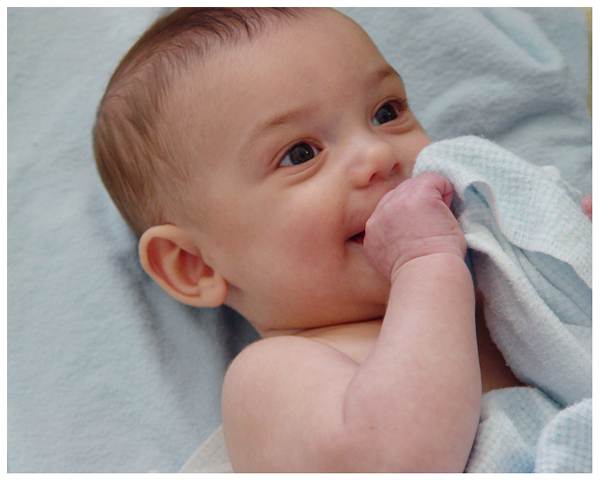
This is something the intuitive have known for a long time. Baby's brains are ready and open for business from a very young age. Baby talk is the foundation of language. It is how babies practice and imitate the adults around them. Ask a smart parent, they will tell you.
The scientists are catching on, too. M.D. Perri Klass in the New York Times, "Babble is increasingly being understood as an essential precursor to speech, and as a key predictor of both cognitive and social emotional development."
What is more interesting is first-year babies all over the world babble in similar ways, but during their second year, toddlers mold their sounds into the words of their native tongues.
This has implications for linguistics that stretch from the Biblical Tower of Babble story to the co-development of the human species.
For parents this is a reminder to talk to your kids even from the youngest age. Scientists' research indicates that babble has cognition in common with questions. Babies' brains are open for reception when they are babbling along in baby talk. Research also suggests that the television and the computer don't substitute for human interaction when it comes to language learning. Babies are picking up on facial clues and gestures as an essential part of their language skill development.
The New York Times reports that a baby hears much of language and is able to differentiate well before it can reproduce the same range of sounds. The experiments argue that a baby’s vocalizations signal a state of focused attention and a readiness to learn. When parents respond to babble by naming the object at hand babies are more likely to learn words.
This kind of linguistic and neurological digging is a wonderful nexus for people to understand our common humanity. And a great reason to start talking to your kids as early as you can.
Labels: Language, Practical Advice, science, thought
Sunday, October 17, 2010
Tornadoes in NYC?!?

Tornadoes ripped through New York last month killing thousands of trees. The Clarion Content was shocked at the bare minimum of ripple this caused in the American media. Tornadoes in New York felt to us like just the kind of thing that the global warming alarmists would seize upon to promote their legislative cause.
While the Clarion Content does not believe that global warming has the capacity to wipe out the planet and its ecosystems, it does have the power to radically reorient them, with the possibility of massive species extinctions in the process. Still the scale of time involved is geologic, this is one of the nexuses where we clash with the global warming lobby. If we had not been raised in the era of The Population Bomb, we might be able to be more sympathetic to the warming tribe's claims that the change is reaching a tipping point, that the time scale is exponential not linear, and we are at the really sharp point of the curve.
This debate aside, we can't believe more people are not howling about tornadoes in New York City. Maybe it was because there were no deaths? But to the Clarion Content's way of thinking, one of the single most effective tactics to convince the masses that urgent reorientation of humanity's treatment of the global ecosystem is necessary, is extreme weather. Extreme weather, volatile weather, atypical weather is among the most convincing of events to people who cannot observe ocean rise or conceptualize ice cap melting.
Tornadoes in New York City feels pretty extreme, pretty volatile to us. While in the same year, Los Angeles sets an all-time high in temperature?
Environmental change is self-evidently happening, but it is always happening. Is something epic or cataclysmic in progress? How fast is the train headed down the tracks? ¿Quién sabe?
Labels: ecology, science, thought, weather
Wednesday, September 29, 2010
Science fiction predictions...
that came true. There is a lot of debate about whether or not the majority of science fiction predictions come true. Of course, the easy answer is no. Hundreds, even thousands, of science fiction books are published every year. Most sink like silent stones in the vast cultural pond.
The Clarion Content's editor attended a lecture this week at Duke University, by the great science fiction writer, William Gibson. Gibson made this very point, most science fiction predictions do not come true. He further noted that despite being visions of the future, years on, science fiction books are viewed as a commentary on their times. So while he wrote Neuromancer about the year 2025, it will be viewed by history as a book about 1984 which is when it was published.
It was interesting then, only days after this lecture and absorbing this point, to see a list of eleven science fiction predictions that according to Sarah Kessler of Mashable came true.
Check it out here, from the tank to the i-pod, from the cubicle to the escalator. Kessler includes the excerpts from the texts of the original authors to make her point. It is a fun read.
The Clarion Content's editor attended a lecture this week at Duke University, by the great science fiction writer, William Gibson. Gibson made this very point, most science fiction predictions do not come true. He further noted that despite being visions of the future, years on, science fiction books are viewed as a commentary on their times. So while he wrote Neuromancer about the year 2025, it will be viewed by history as a book about 1984 which is when it was published.
It was interesting then, only days after this lecture and absorbing this point, to see a list of eleven science fiction predictions that according to Sarah Kessler of Mashable came true.
Check it out here, from the tank to the i-pod, from the cubicle to the escalator. Kessler includes the excerpts from the texts of the original authors to make her point. It is a fun read.
Labels: Pop Culture, Predictions, science, technology
Wednesday, September 08, 2010
Shrooms help cancer patients cope

A new study reports a controlled dose of the main ingredient in hallucinogenic mushrooms, psilocybin, appears to help reduce anxiety and lift spirits in people battling advanced cancer. The study, by Dr. Charles Grob, will be published in the January 2011 print issue of the Archives of General Psychiatry.
The government, suffering from bad vibes dating back to the 60's, when its foundations actually shook, is still incredibly reluctant to fund this kind of research. Health Day reports that it took four years to get the funding and necessary approvals for this trial, even though it only involved a dozen patients (all with advanced cancer). It has been over thirty years since a similar study was conducted.
In the study, patients reported feeling calmer and happier, and that they felt closer connections to friends and family. They were better able to address end-of-life issues. This is very important according to Dr. Amy Abernethy, director of the Duke University Cancer Care Research Program in Durham, N.C. She told Health Day, "We know that with some people with advanced life-threatening illness, there is very truly a substantial existential component and importance and need for meaning-making in life, and that until people start making that transition they can be very, very distressed. It can be hard to get back to the business-of-life closures and other things you need to do at the end of life. This kind of intervention [may] allow people time and space and extended cognitive ability to reflect on life and see it in a different way, make that transition and then get back into a more relaxed space and get back to the business of living.
"Being in the business of living is about doing what is important and meaningful to you every day even if you don't have many days left, focusing on things like saying goodbye to loved ones, which can be hard to do if you're distressed."
Read the whole story here.
Labels: health, Pop Culture, science
Wednesday, April 21, 2010
Unintended Consequences

The law of unintended consequences is a funny one. We bet this was one of the unknown unknowns even Donald Rumsfeld did not consider. The havoc wreaked on Iraq in recent years have pushed archaeologists to begin excavations in relatively safer and more tranquil Syria.
United States and Syrian excavators have uncovered a huge panoply of artifacts from what must have been a robust pre-urban settlement on the upper Euphrates River at a site known as Tell Zeidan. The New York Times reports, "Zeidan should reveal insights into life in a time called the Ubaid period, 5500 to 4000 B.C. In those poorly studied centuries, irrigation agriculture became widespread, long-distance trade grew in influence socially and economically, powerful political leaders came to the fore."
Archaeologists caught a break because apparently subsequent civilizations and generations did not build on the site. The potential sounds limitless. The Times quotes, Guillermo Algaze, an anthropologist at the University of California, San Diego, "[Zeidan] has the potential to revolutionize current interpretations of how civilization in the Near East came about."
Read the whole article here.
Labels: Pop Culture, science
Monday, February 01, 2010
Should we talk about the weather?

Long Beach, CA
The Clarion Content is not a global warming denier. However, there is so much misinformation out there floating around the global warming debate that it frustrates those who recognize the warming of the planet as scientific fact.
Warming is a long term trend. And however detrimental it is to humankind, it is ludicrous hyperbole to suggest that it will wipe us out as a species, let alone destroy the planet. It will make it hard (or even impossible) for humans to continue living in some of our current habitats, but that is a far cry from the cataclysmic disaster that warmings most fervent proselytizers preach about. Make no mistake, our language here is not accidental, the supporters of global warming from actual scientists to the inventor of internet, Al Gore, have taken their fight against global warming to the level of a religious crusade. In the Clarion Content's view this is outrageous and a tactical mistake. Major scientific studies about warming have been discredited and/or undermined by this posturing. To the Clarion Content, it would be much more honest to debate warming's harms and other outcomes on an economic basis. In our view, that is what the debate it about, how much money is responding to the effects of warming ex post facto going to cost, versus how much is attempting to ameliorate and avert warming's harms and other outcomes in advance going to cost.
Either approach is likely to be expensive. They require major changes in societal behavior and habit. It is our belief that like health there are logical, cost effective, preventive steps that can be taken and that there are prohibitively expensive and unnecessary actions that make no sense when the patient is the planet. The Clarion Content puts an American "cap and trade" bill as we have heard it proposed in the second category. One of the better preventive steps we think Americans must consider is taking a long hard look at is the locations where we build and have built. There are frequent reminders of the urgent need to reexamine where we humans live.
The effects of global warming are already being felt. The most commonly perceived is what we might call "weather turbulence" or the increased intensity of storms worldwide. There are a plethora of examples: the worst United States tornado season in 100 years, heavy winter weather in England--after a season of historic flooding, extremely cold temperatures in the American South, stronger and more frequent hurricanes, snow in Jerusalem and on and on. This weather turbulence underlines the urgency to vet more carefully where we, as humans, live. We cannot simply keep rebuilding in the most vulnerable areas and subsidizing it as a part of the public good. Our libertarian sensibilities say both, build where you will, and don't expect the collective to reimburse the foolhardy for the cost of building somewhere especially vulnerable. We might show up as friends and communitarians to help you rebuild your house or business. Elsewhere, perhaps?
The most recent eye popping example of extreme weather wreaking havoc on a highly populated area came from what is normally balmy Southern California. Two weeks ago the National Weather Service recorded at least one tornado and four waterspouts in Orange Country, California. Boats docked in a marina were tossed more than fifty feet in the air. In a matter of minutes chest-high water gushed through the streets of Belmont Heights, CA . The storms ripped the roofs off of buildings and shattered windows. The Los Angeles Times reported scenes of chaos. Our hearts go out to those who have suffered and are suffering.
Be warned warming will inflict far more severe harm on other less affluent communities with fewer resources to cope with severe weather.
Labels: ecology, Economy, Politics, science, weather
