Monday, April 02, 2012
Sketchy, Etch A Sketchy
When the Clarion Content's editorial offices were in San Francisco, one new piece of slang verbiage that was increasing popular was "sketchy." In the late 90's sketchy's meaning had been modified to refer to something shady or unsavory. The word had morphed from our youthful understanding of it as unfinished or incomplete to a much darker cloud of meaning.
Sketchy situations were to be avoided. People who appeared to be trouble or bring trouble were referred to as "sketch." As in, "Watch out for that dude, he's sketch."

A situation that was extremely ugly or clearly bad news was often tagged with a superlatively construction, "Etch A Sketchy," meaning supremely sketchy.
So it was with personal amusement, as well as societally, that we laughed along with those who mocked Mitt Romney's campaign for saying that the move from the G.O.P. primaries to the general election was "...almost like an Etch A Sketch. You can kind of shake it up and restart all over again."
The truth has slipped out!
How sketchy!
You are not supposed to reveal the shape-shifting nature of your candidate that openly and plainly. They will argue, everybody does it. It being, tack one direction for the party's primaries, and tack back the other direction for the general election. They will tell you, dear readers, it is common place. And maybe so, the Clarion Content would hardly argue that today's politicians aren't a sketchy bunch, maneuvering and crafting their message to their immediate audience.
The interesting element to this story is two-fold, one, that Romney's closest adviser, Eric Fehrnstrom, put it out there. As we said, it is amazingly indiscreet, an open secret that you just don't say, especially about your boss.
And two, we find it fascinating that this is the core of the criticism a hard right candidate might make against Romney. He is a position shifter. The evidence of it is litany.1 It is the stick a Palin or a Bachmann might have used to bludgeon Governor Romney. He was the primogenitor of "ObamaCare," now he is running against it. His 2002 Gubernatorial campaign website said he would support the strict enforcement of gun laws and recognition of domestic partnership for same-sex couples. One doesn't win Republican presidential primaries talking like that, ask Jon Huntsman. Political guru Nate Silver, over at the 538, wonders why Republican primary challengers haven't used this line of attack more successfully on Romney.
The Clarion Content agrees, the man has no core. And his own team found the perfect metaphor. When we once would have referred to Romney as slippery, hard to pin down, constantly flopping around; sketchy is much evocative of the reality. Romney is not simply a flip-flopper, he is an impermanent outline, not a line drawn in the sand, but sand blowing in the wind, positionless, ever shifting, ephemeral, willing to simply shake the board and start over with the next set of hollow promises and platitudes.2
Notes
1Ironically, it does not help President Obama much as a campaign tactic, because Romney's position shifting generally pushes him towards the middle. Obama can't very well attack, Romney for flip-flopping on "ObamaCare" or generally moving leftward.
2Lucky for President Obama, with $4/gal gasoline and a closet full of his own empty promises, he needs to face a candidate this lousy to have a good chance at re-election.
Sketchy situations were to be avoided. People who appeared to be trouble or bring trouble were referred to as "sketch." As in, "Watch out for that dude, he's sketch."
A situation that was extremely ugly or clearly bad news was often tagged with a superlatively construction, "Etch A Sketchy," meaning supremely sketchy.
So it was with personal amusement, as well as societally, that we laughed along with those who mocked Mitt Romney's campaign for saying that the move from the G.O.P. primaries to the general election was "...almost like an Etch A Sketch. You can kind of shake it up and restart all over again."
The truth has slipped out!
How sketchy!
You are not supposed to reveal the shape-shifting nature of your candidate that openly and plainly. They will argue, everybody does it. It being, tack one direction for the party's primaries, and tack back the other direction for the general election. They will tell you, dear readers, it is common place. And maybe so, the Clarion Content would hardly argue that today's politicians aren't a sketchy bunch, maneuvering and crafting their message to their immediate audience.
The interesting element to this story is two-fold, one, that Romney's closest adviser, Eric Fehrnstrom, put it out there. As we said, it is amazingly indiscreet, an open secret that you just don't say, especially about your boss.
And two, we find it fascinating that this is the core of the criticism a hard right candidate might make against Romney. He is a position shifter. The evidence of it is litany.1 It is the stick a Palin or a Bachmann might have used to bludgeon Governor Romney. He was the primogenitor of "ObamaCare," now he is running against it. His 2002 Gubernatorial campaign website said he would support the strict enforcement of gun laws and recognition of domestic partnership for same-sex couples. One doesn't win Republican presidential primaries talking like that, ask Jon Huntsman. Political guru Nate Silver, over at the 538, wonders why Republican primary challengers haven't used this line of attack more successfully on Romney.
The Clarion Content agrees, the man has no core. And his own team found the perfect metaphor. When we once would have referred to Romney as slippery, hard to pin down, constantly flopping around; sketchy is much evocative of the reality. Romney is not simply a flip-flopper, he is an impermanent outline, not a line drawn in the sand, but sand blowing in the wind, positionless, ever shifting, ephemeral, willing to simply shake the board and start over with the next set of hollow promises and platitudes.2
Notes
1Ironically, it does not help President Obama much as a campaign tactic, because Romney's position shifting generally pushes him towards the middle. Obama can't very well attack, Romney for flip-flopping on "ObamaCare" or generally moving leftward.
2Lucky for President Obama, with $4/gal gasoline and a closet full of his own empty promises, he needs to face a candidate this lousy to have a good chance at re-election.
Labels: 2012 presidential election, Language, Politics
Tuesday, January 31, 2012
Clouds of Meaning
The depth of definitions offered at Urban Dictionary allow for such nuance. Nuance is the lifeblood of the Clarion Content's thoughts about meaning. In our mind's eye all words carry an ever changing cloud of meaning around them. Each word is the center of a cloud and the ultimate boundries of both denotation and connotation are amorphous and ever changing, as language evolves.
Words and meaning analogize well with clouds. Clouds are never stagnant, they are always in motion, nor do they ever have perfectly defined edges, the edge is Heisenbergian1, uncertain, and viewed through the lens of the observer. Further all the clouds interact in an especially complex and co-related way in the ecosystem that is the Earth's atmosphere, much as words and language do in our human travels. Butterfly wings on the other side of the language world resonate.
Notes
1Those seeking the meaning of words and subsequently adopting them as part of their vocabulary effect the very meaning of said words through this process.
Words and meaning analogize well with clouds. Clouds are never stagnant, they are always in motion, nor do they ever have perfectly defined edges, the edge is Heisenbergian1, uncertain, and viewed through the lens of the observer. Further all the clouds interact in an especially complex and co-related way in the ecosystem that is the Earth's atmosphere, much as words and language do in our human travels. Butterfly wings on the other side of the language world resonate.
Notes
1Those seeking the meaning of words and subsequently adopting them as part of their vocabulary effect the very meaning of said words through this process.
Friday, October 07, 2011
Open Letter to the News & Observer
Are Facebook status updates the new poetry?
Is texting vernacular just e.e. cummings shaken and stirred?
Hardly says Clarion Content guest columnist, poet and writer, Amber C. Crews. Ms. Crews pulls no punches with her take on an article penned by Taryn Oesch here in the Raleigh News and Observer. Ms. Oesch blithely asserts, "I've decided that 21st-century communication - email, Facebook, text messages - aren't a breakdown of human interaction and relationships, but a form of poetry." Like Ms. Crews, our editor's instinctive reaction upon reading that line was, "Wait. What?" We love that there are people who feel passionately about the state of poetry in our era.

Stretching the limits of Facebook...
We warn you, as we often do, dear readers, the following letter, which is from the heart and the gut, is PG-13, like a lot of excellent poetry.
*****************************************************************
"You’ve got to be kidding me, or we are all fucked."
-Amber C. Crews
If the opinions of Taryn Oesch in her article "In our text updates, we are making poetry and connections" are at all representative of our cultural attitude towards art and community, then we are all fucked. (Read it here.) As a poet and writer, I have a close relationship with words and meaning. Ms. Oesch proposes that "[t]he purpose of poetry is to get as much meaning and feeling across as you can in as few words as possible. Aren’t texts and Facebook statuses the same concept?"
I don’t want to get into an argument about the definition of art and its purpose. It has been debated ad nauseam and art is becoming increasingly difficult to define in the 21st century. But you have to be kidding me. Facebook status updates and texting are poetry? I have looked over the shoulders of more than a few friends, just curious about the whole Facebook thing, not having a personal account, and I remember a bunch of pictures, random quotes, and song lyrics, and status update gems like "like if you have That one friend who will borrow stuff from you & never give it back" and "that awkward moment When you have too much lotion on and don`t know where to put it."
Looking at my own text inbox now, I see "Please tell me you are enjoying this gorgeous day!" "Yep!" and "Can I borrow one egg pleeaaasseee!?" Grammar is largely out the window, context an idea of the past, and nothing exists that is not instantly forgettable.
I don’t know how other poets work, but when I’m creating a poem each word, punctuation mark, and even every space on the page is labored over, thought about, tweaked, laboriously re-written, all in the search for the perfect combination that will express the precise image, feeling, and meaning that I intend. I highly doubt that is what’s going on with the light speed, verbal vomit that litters cell phones and internet pages. Ms. Oesch states that “Some say it’s ridiculous, the need to put everything on Facebook. I say it’s fundamental self-expression. It’s art in its most basic form.” If Facebook and text messaging represent our cultural “self-expression,” our creative power, our ability to reflect and propose new ways of seeing the world, then again, I say, we’re all fucked. Art, writing, and the courageous exploration of new thought are what balance all the depression, debt, death, and darkness of this chaotic universe. To see the human spirit soar in something challenging or moving, anything that gets you to think, gives meaning to life. If I am looking into a future where all that is boiled down to unconscious streams of cyber-messaging . . . I can’t think of a more desolate existence pretending to be connection.
Is texting vernacular just e.e. cummings shaken and stirred?
Hardly says Clarion Content guest columnist, poet and writer, Amber C. Crews. Ms. Crews pulls no punches with her take on an article penned by Taryn Oesch here in the Raleigh News and Observer. Ms. Oesch blithely asserts, "I've decided that 21st-century communication - email, Facebook, text messages - aren't a breakdown of human interaction and relationships, but a form of poetry." Like Ms. Crews, our editor's instinctive reaction upon reading that line was, "Wait. What?" We love that there are people who feel passionately about the state of poetry in our era.
Stretching the limits of Facebook...
We warn you, as we often do, dear readers, the following letter, which is from the heart and the gut, is PG-13, like a lot of excellent poetry.
"You’ve got to be kidding me, or we are all fucked."
-Amber C. Crews
If the opinions of Taryn Oesch in her article "In our text updates, we are making poetry and connections" are at all representative of our cultural attitude towards art and community, then we are all fucked. (Read it here.) As a poet and writer, I have a close relationship with words and meaning. Ms. Oesch proposes that "[t]he purpose of poetry is to get as much meaning and feeling across as you can in as few words as possible. Aren’t texts and Facebook statuses the same concept?"
I don’t want to get into an argument about the definition of art and its purpose. It has been debated ad nauseam and art is becoming increasingly difficult to define in the 21st century. But you have to be kidding me. Facebook status updates and texting are poetry? I have looked over the shoulders of more than a few friends, just curious about the whole Facebook thing, not having a personal account, and I remember a bunch of pictures, random quotes, and song lyrics, and status update gems like "like if you have That one friend who will borrow stuff from you & never give it back" and "that awkward moment When you have too much lotion on and don`t know where to put it."
Looking at my own text inbox now, I see "Please tell me you are enjoying this gorgeous day!" "Yep!" and "Can I borrow one egg pleeaaasseee!?" Grammar is largely out the window, context an idea of the past, and nothing exists that is not instantly forgettable.
I don’t know how other poets work, but when I’m creating a poem each word, punctuation mark, and even every space on the page is labored over, thought about, tweaked, laboriously re-written, all in the search for the perfect combination that will express the precise image, feeling, and meaning that I intend. I highly doubt that is what’s going on with the light speed, verbal vomit that litters cell phones and internet pages. Ms. Oesch states that “Some say it’s ridiculous, the need to put everything on Facebook. I say it’s fundamental self-expression. It’s art in its most basic form.” If Facebook and text messaging represent our cultural “self-expression,” our creative power, our ability to reflect and propose new ways of seeing the world, then again, I say, we’re all fucked. Art, writing, and the courageous exploration of new thought are what balance all the depression, debt, death, and darkness of this chaotic universe. To see the human spirit soar in something challenging or moving, anything that gets you to think, gives meaning to life. If I am looking into a future where all that is boiled down to unconscious streams of cyber-messaging . . . I can’t think of a more desolate existence pretending to be connection.
Labels: Guest columns, Language, thought
Monday, June 27, 2011
Internalizing
A fascinating little video clip here via the Twitter of Courtney Roskop.
Not at all clear on the context, but love the premise.
It would appear that the video game's characters are being played by actors who are musing on the morality of giving this kind of über-violent game to intelligent people. How would those people react? But before they can give an answer, they are interrupted by the squirrel and have to go back into shoot'em up mode. No time for thinking!
What a wonderful little Möbius strip of thought.
Not at all clear on the context, but love the premise.
It would appear that the video game's characters are being played by actors who are musing on the morality of giving this kind of über-violent game to intelligent people. How would those people react? But before they can give an answer, they are interrupted by the squirrel and have to go back into shoot'em up mode. No time for thinking!
What a wonderful little Möbius strip of thought.
Labels: humor, Language, Pop Culture, thought
Wednesday, March 09, 2011
Deviation from the mean
Reprinted, originally published, February 2010

As long time readers of the Clarion Content know we are not believers in a bright line standard that delineates crazy from sane. Life is cast hues. It was then we read with great interest, and a tremble that fluttered between nervous laughter and real trepidation, an article in the New York Times about The fifth edition of the Diagnostic and Statistical Manual of Mental Disorders.
This book, last revised sixteen years ago, is what its title purports, the handbook of what the profession of psychiatry considers crazy. The New York Times quotes Dr. Michael First, a professor of psychiatry at Columbia University who edited the fourth edition of the manual, "Anything you put in that book, any little change you make, has huge implications not only for psychiatry but for pharmaceutical marketing, research, for the legal system, for who’s considered to be normal or not, for who’s considered disabled."
One book to rule them all, One book to define them,
One book to cast them all and in the darkness bind them.
Not surprisingly when this is the scenario, the manual and its contents have been the subject of intense lobbying efforts. One significant change being recommended according to the Times is adding a childhood disorder called temper dysregulation disorder with dysphoria, a move that grew out of recent findings that many wildly aggressive, irritable children who have been given a diagnosis of bipolar disorder do not have it. Sounds to the Clarion Content like trying to take two wrongs and produce a right; bad idea. The Times reports, "The misdiagnosis led many children to be given powerful antipsychotic drugs, which have serious side effects, including metabolic changes...there have been widespread reports that doctors promoting the diagnosis received consulting and speaking fees from the makers of the drugs."
The urge to label and stereotype is a powerful human desire. The unknown is fearful and threatening, people who do not behave as expected even more so. In an existence limited and capped by looming mortality, uncertainty produces angst. Pigeonholing and defining the "other" give a sense of security. What is known is in the realm of what has been conquered. Humanity has explored the planet to near its ends, gaining great comfort in knowing more about what exists. With the exploration of terra firma nearly complete, societally we have turned the lens inward.
The Clarion Content cannot hold with the kind of labeling that this manual of psychiatry implies. Our understanding of the metaverse believes that this sort categorizing falls somewhere between repugnant and unhelpful. While not entirely false, stereotypes contain tropes that repeatedly misdefine and misunderstand individuals. The shrinks try to account for this type of critique by using scales of severity, from mild to severe, and rating symptoms. This attempt seems paradoxical to the Clarion Content. When labeling fails to address the specificity and uniqueness of the underlying individual cases, how does more labeling appear to be the answer? At what point do the categories lose meaning? Could we not rate every human being to be their own unique combination of characteristics? The fallacy of treating the mind like other physical ailments of the body becomes more ludicrous with every passing year. In our view the direction we should be proceeding is to examine the physical ailments of the body as things that can be treated and ameliorated by processes within our own minds.
The best treatments, mental and physical, imply an acceptance of our individuality and uniqueness however threatening it might be.
As long time readers of the Clarion Content know we are not believers in a bright line standard that delineates crazy from sane. Life is cast hues. It was then we read with great interest, and a tremble that fluttered between nervous laughter and real trepidation, an article in the New York Times about The fifth edition of the Diagnostic and Statistical Manual of Mental Disorders.
This book, last revised sixteen years ago, is what its title purports, the handbook of what the profession of psychiatry considers crazy. The New York Times quotes Dr. Michael First, a professor of psychiatry at Columbia University who edited the fourth edition of the manual, "Anything you put in that book, any little change you make, has huge implications not only for psychiatry but for pharmaceutical marketing, research, for the legal system, for who’s considered to be normal or not, for who’s considered disabled."
One book to rule them all, One book to define them,
One book to cast them all and in the darkness bind them.
Not surprisingly when this is the scenario, the manual and its contents have been the subject of intense lobbying efforts. One significant change being recommended according to the Times is adding a childhood disorder called temper dysregulation disorder with dysphoria, a move that grew out of recent findings that many wildly aggressive, irritable children who have been given a diagnosis of bipolar disorder do not have it. Sounds to the Clarion Content like trying to take two wrongs and produce a right; bad idea. The Times reports, "The misdiagnosis led many children to be given powerful antipsychotic drugs, which have serious side effects, including metabolic changes...there have been widespread reports that doctors promoting the diagnosis received consulting and speaking fees from the makers of the drugs."
The urge to label and stereotype is a powerful human desire. The unknown is fearful and threatening, people who do not behave as expected even more so. In an existence limited and capped by looming mortality, uncertainty produces angst. Pigeonholing and defining the "other" give a sense of security. What is known is in the realm of what has been conquered. Humanity has explored the planet to near its ends, gaining great comfort in knowing more about what exists. With the exploration of terra firma nearly complete, societally we have turned the lens inward.
The Clarion Content cannot hold with the kind of labeling that this manual of psychiatry implies. Our understanding of the metaverse believes that this sort categorizing falls somewhere between repugnant and unhelpful. While not entirely false, stereotypes contain tropes that repeatedly misdefine and misunderstand individuals. The shrinks try to account for this type of critique by using scales of severity, from mild to severe, and rating symptoms. This attempt seems paradoxical to the Clarion Content. When labeling fails to address the specificity and uniqueness of the underlying individual cases, how does more labeling appear to be the answer? At what point do the categories lose meaning? Could we not rate every human being to be their own unique combination of characteristics? The fallacy of treating the mind like other physical ailments of the body becomes more ludicrous with every passing year. In our view the direction we should be proceeding is to examine the physical ailments of the body as things that can be treated and ameliorated by processes within our own minds.
The best treatments, mental and physical, imply an acceptance of our individuality and uniqueness however threatening it might be.
Labels: Language, science, thought
Sunday, October 24, 2010
Mac Envy

We loved the Urban Dictionary definition of the day yesterday. The word phrase was "Mac envy." Defined as, "a state of mind in which a PC owner realizes his computer sucks, then is immediately jealous of all his Mac-owning friends."
Brilliant!
Labels: Language, Pop Culture, technology
Tuesday, October 19, 2010
Baby Talk
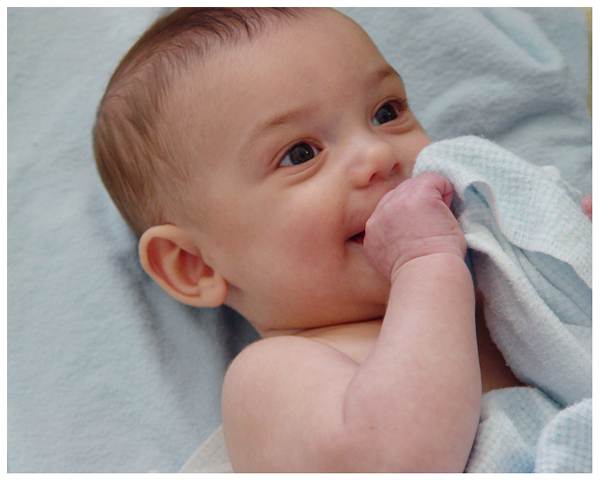
This is something the intuitive have known for a long time. Baby's brains are ready and open for business from a very young age. Baby talk is the foundation of language. It is how babies practice and imitate the adults around them. Ask a smart parent, they will tell you.
The scientists are catching on, too. M.D. Perri Klass in the New York Times, "Babble is increasingly being understood as an essential precursor to speech, and as a key predictor of both cognitive and social emotional development."
What is more interesting is first-year babies all over the world babble in similar ways, but during their second year, toddlers mold their sounds into the words of their native tongues.
This has implications for linguistics that stretch from the Biblical Tower of Babble story to the co-development of the human species.
For parents this is a reminder to talk to your kids even from the youngest age. Scientists' research indicates that babble has cognition in common with questions. Babies' brains are open for reception when they are babbling along in baby talk. Research also suggests that the television and the computer don't substitute for human interaction when it comes to language learning. Babies are picking up on facial clues and gestures as an essential part of their language skill development.
The New York Times reports that a baby hears much of language and is able to differentiate well before it can reproduce the same range of sounds. The experiments argue that a baby’s vocalizations signal a state of focused attention and a readiness to learn. When parents respond to babble by naming the object at hand babies are more likely to learn words.
This kind of linguistic and neurological digging is a wonderful nexus for people to understand our common humanity. And a great reason to start talking to your kids as early as you can.
Labels: Language, Practical Advice, science, thought
Friday, September 10, 2010
New textual punctuation


Never before seen grammar*...Have you noted, dear readers, one of the new textual punctuation techniques that the kids of today are using?
It is to place a period after each word in a given sentence. This full stop functions as a hammer to bang home the seriousness, gravitas, power of the utterance.
Check out this example from the infamous website, Texts from Last night...
"Best. Roommate. Ever."
Which in modern textual grammar is bigger ups than "Best roommate ever!!!"
*Save for possibly in a telegrams.
Labels: Language, technology
Thursday, May 20, 2010
What do you call your boy toy?

Our esteemed guest correspondent recently returned from Ethiopia and you might think that a guy like that would not have extra time on his hands for speculation like this. But you would be wrong. Without further ado, we give you the lexicographical musings of J. Coop.
I recently took a flight from Cairo to New York. Now, on solo domestic flights I generally make a point of avoiding conversation with my seatmates. Experience has shown that there is at least a 70% chance that the person is from a Great Lakes state and that they are visiting their (great aunt / second cousin / parakeet phone pal) on account of the recent (birth of their third child / refinancing of their home / loss of their tooth). Not only that, but by replying, “Fine, thank you” to their “Hi, how are you?”, you may have unwittingly invited a lengthy recounting of their thoroughly unremarkable family history. Best to have a book handy. When the hilarious exploits of your seatmate’s house pet become tedious, the conversation can usually be ended with a brief sideways glare and something to the effect of, “What was that? I’m sorry, I was having trouble hearing you over this fascinating book I’m reading.”
On this particular day, I suppose I was feeling generous and friendly, because I did indeed enter a dialogue with my seatmate. After all, I figured the risk was reduced, as most people can’t afford the upkeep of international parakeet phone pals (to say nothing of the language barrier). My seatmate was a pleasant American woman, probably in her 50s, and incidentally from the Seattle area, so we had something in common. Given the circumstances, there were the natural questions about what had brought the other to Cairo. I told her I was sightseeing on the way home from a business trip, and she told me that she had been traveling with her . . . partner, the final word said not with a literal wink and nod, but with an intonation that implied it. Not being familiar with the established insinuations of her generation, I was at a loss. What could be the meaning behind this bizarre emphasis of a perfectly ambiguous word? Was she referring to a business partner, or was this more like a “pardner”: an ally in times of cattle-wranglin’, whiskey-swillin’, and six-shooter-shootin’? Was she trying to tell me that she was gay? The word choice had left me confounded.
Fortunately, I had the good sense to keep my confusion to myself. I was able to deduce from the continuation of the conversation that this particular usage of the word could be defined something like this: partner, n. [pahrt-ner]: A gentleman bachelor, close in age to the woman, with whom she is romantically involved.
Here, dear reader, is where I beseech you for your advice and assistance. We must find a word with a more specific definition to be used by ladies in the situation of my seatmate. This word must grant her the ability to better communicate the nature of her human relationships to louts such as myself.
I’ve put some thought into this, and have yet to come up with a satisfying solution. For more mature persons, it’s understandable why the terms boyfriend and girlfriend might not be preferred. Fortunately for the seasoned and sophisticated man, there is always the option of referring to his female counterpart as a ladyfriend. After all, a girlfriend may be cute and flirtatious, but a ladyfriend is experienced and knows what she wants. Rawr.
But what is the male equivalent of a ladyfriend? The obvious response would be a gentlemanfriend, but that doesn’t roll of the tongue. Also, the term manfriend is right out, for reasons I can’t quite put my finger on. Guyfriend, maybe? That’s still sort of boyish, but maybe could work. I dunno, I’ve got nothing else. So I’ll put it to you, standardized test analogy style:
Girlfriend : Boyfriend :: Ladyfriend : ???
(This should go without saying, but I better not hear a suggestion of “lover” or any phrase with “lover” as part of it. That term just makes me cringe, and it’s a word you just don’t want to hear come out of anyone, unless it’s Will Ferrell in an SNL skit.)
Labels: Guest columns, humor, Language, Pop Culture
Sunday, December 27, 2009
Compound words

Just a quick follow-up to our post on the University of North Carolina's Davis Library Finals' Week flash mob. How many challenging, modern, compound-or-not words were there in that post?
Flash mob, itself, a compound word, two words or hyphenated? Wikipedia opts for two words in its header, but it can't make up its mind because it then opens its entry with, "A flash mob (or flashmob)..." Merriam-Webster also opts for two words. The definitive source for such a modern term, Urban Dictionary (UD), opts for two words, as well.
However, easily flash mob is dispatched by the authorities, the Clarion Content thinks it is not as clear-cut. The idea of a flash mob is a singular concept, not an adjective modifying mob, as would be the case in "large" mob or "wild" mob.
Other problematic words emerged from this same post, handheld, for example. Mozilla Firefox is confident that handheld is not a compound word, brazenly underlining it. But then again, what does Mozilla know? Well for one thing, it knows how to spell Mozilla. Though, not so generous to potential competitors, it underlines Facebook as if it had never heard of the massive network. Facebook is a proper noun, ergo the choice for two words, hyphen or compound word belongs to the owner of the entity that is the name. In this case they have opted for one word, and Mozilla, along with Microsoft Word, Google Docs and their ilk need to accept it.
But back to handheld, once again Wikipedia waffles. "Hand held" re-directs to the article for "Mobile Device" which in its first sentence uses handheld as a single compound word. Searching Wikipedia for "hand-held" hyphenated yields a disambiguation page where handheld is treated as a compound word in four article titles and a hyphenated word in two titles. Mozilla, of course, accepts the hyphenated word "hand-held" because it is made up of two words it accepts and the hyphen is a signifier to treat them separately. Merriam-Webster in this case is definitive opting for the compound word "handheld" and dating it all the way back to 1923. The Clarion Content cannot fail to agree, "handheld" a singular descriptive state, an adjective, one word.
The final to compound or not word that popped up prominently in the Davis Library Flash Mob piece was "chatroom." Of course, Mozilla Firefox, in its stern, unforgiving manner says it is a mispelling. As noted previously, due to a programming default, it is willing to accept to "chat-room." Merriam-Webster agrees with Mozilla's anti-chatroom stance. It dates the phrase "chat room" to 1986 and says two words, no hyphen. It undermines itself to a certain extent because the Google Ad Sense ad on the page shills for a one word "chatroom" site. Wikipedia prefers two words for chatroom although the article opens with the dual warnings, "This article needs additional citations for verification," and "This article may require cleanup to meet Wikipedia's quality standards."
The Clarion Content is inclined to disagree with the fuddy-duddies at Merriam-Webster and the negatistas Mozilla (who think fuddy-duddy isn't a word and have never heard of negatista). Chatroom is a singular concept, a noun referring to a particular meme, a virtual room where one goes online to have chats. Urban Dictionary has no fewer than eleven definitions of "chatroom" all of which treat it as one word. UD also has seven chatroom related phrases defined from "chatroom thug" to "chatroom whore" all of which treat chatroom as a singular phrase. It is certainly still arguable though, even via modern sources, for example, the website www.techfaq.com offers a more reasonable definition for chatroom than any of those on UD, but treats "chat room" as two words.
Ah, these modern words and phrases bring us much fascinating debate. One of our favorite modern linguists, And He Melts noted that, Philip K. Dick in his 1964 novel, The Unteleported Man, produced in the first thirty pages alone a massive treasury trove of hyphenated words ranging from "the impatient ("syn-cof," instead of "synthetic coffee"), [to] the needless ("break-through"), [to] the redundant ("aud-receptors/aud-monitors/data-monitors/data-recorders"), [to] the quaint ("light-years, ""colony-world"), [to] the way-ahead-of-his-time ("UN-egged-on"), and the simply fantastic ("Swiss-made nipple-assist")." We look forward to more of this kind of linguistic fun, thinking, and discussion about the compound words of this modern era. (Which is not to say there are not fun old compound words still to debate.)
Labels: Language
Tuesday, December 22, 2009
Wack is back
Bantering around the Clarion Content's editorial offices has revealed a consensus that "wack" is back. Once part of the standard verbiage of the youth of the seventies and eighties "wack" had been on an unofficial cultural hiatus. It had moved to the fringes. It had, if you would, become a little wack to use the word wack.
In the office, the speculation on wack's re-rise centered on the times. The culture of the seventies had a brief redux in the late nineties, when trends like bell bottoms and the song "I will Survive" resurfaced. The era was nostalgically treated in "Dazed and Confused" and "That 70's Show," but this was all a few years back, and it didn't bring wack back. Rather it is the times today, now- the era, the age, the situation. This decade, call it the aughts or the double zeroes as you will, but the way things are going, things; in our lives and society are more wack! Ergo it is more appropriate to use the word wack these days.
In the nineties when the most wack political shit happening was Oval Offices blowjobs and Lincoln Bedroom rentals, wack was not the cultural norm. The stock market was still booming, the real estate market was humming too. Kids of the 90's generation, born after the fall of the Berlin Wall and the collapse of the Soviets as a potentially world annihilating enemy, had not seen that much wack shit. Suddenly, September 11th, 2001 shifts the paradigm.
It follows that as much wack shit happens in a decade as had happened in the whole lives of their parents. Two wars, America's evisceration as the world's beacon of liberty, massive wealth collapse and unemployment: cumulatively a yawning vision that augurs they might finally be that proverbial generation that grows-up to do not quite as well as their parents did; fiscally.
Wack, indeed.
Tuesday, October 27, 2009
Nature
Just a quick editor's note here: not sure if anyone clicked through the link in this morning's post about Einstein's insight that time's linearity is illusory, but if you did click through the link, it went to the European Organization for Nuclear Research homepage for the Large Hadron Collider.
This is the page that gives their official spiel on the machine with which they hope to recreate the conditions just after the Big Bang. The single most interesting thing in the manifesto née sales brochure is that they arbitrarily capitalize nature, ostensibly treating it as a proper noun. It is our recollection that nature with the capital N is associated with the divine, nu? Aren't these folks particle physicists? Who made the call on capitalizing the word nature? It has especially explosive implications given the fears of some about what the Large Hadron Collider may be capable of reproducing.
Labels: Language, science, thought
Tuesday, September 01, 2009
The Death of the Apostrophe
The long rumored death of the apostrophe occurred last night at 9.42pm Eastern Standard Time. The final death blow was a text message exchange. According to Verizon Wireless it read, "Lauras boys goin to da party." Reply, "Sorry cant make it." After millions of pinprick woundings in various emails, Facebook posts and previous text messages this was the final blow to the aging and atrophied apostrophe. Commentators such as Lynne Truss had sounded the alarm many years ago, but the long decline was unstoppable.
Farewell, old sod, theyll be less punctuation without you.
Farewell, old sod, theyll be less punctuation without you.
Labels: Language
Wednesday, August 12, 2009
Musical Communion
This one comes to us courtesy of our northern most New Jersey reader. As she so succinctly summed it up, Bobby McFerrin Hacks Your Brain with the Pentatonic Scale.
World Science Festival 2009: Bobby McFerrin Demonstrates...
Labels: Language, music, thought
Thursday, July 30, 2009
Have a good day

We go around saying "Have a good day" a lot, all the time as a matter of fact. But, it is a wish, not a command. We are not trying to force our positive attitude on you.
Sometimes we see a grimace and we can just hear the George Carlin-esque response. "Have a good day! Have a good day? Who the hell is this guy? I'll have a crappy day if I feel like it. And there is nuthin' you can do about it!"
Hey feel free, people. Have a good day, have a crummy day, no imperatives here. We wish for you to have a good day, we are sending our best vibes, our karmic emanations in your direction, but by all means, have whatever kind of day you prefer. Just know that we hope that it's a good one.
Monday, June 22, 2009
The Emoticons of texting

As you may or may not be aware dear readers, the Clarion Content's editor-in-chief is fascinated with the code switching that is on-going in the new language of texting. English has endless vernaculars, and even technologically speaking, texting is but one code among many tech jargons.
Our sincere thanks to the south Durham reader who recently forwarded our way one of the most complete lists we have seen interpreting the emoticons of texting. Interestingly most of these emoticons are primarily made with mathematical and grammatical symbols, rather than English letters. Though we do not endorse all of these interpretations, (follow this link to Wikipedia's fascinating take) we thought we'd share them.
Follow this link to see the big list.
Labels: Language, Pop Culture, technology
Tuesday, May 12, 2009
List of the Emoticons of Texting
Full List of the Emoticons of Texting
we do not endorse all of these interpretations
HAPPY, SMILING, LAUGHING
:-) smiling; agreeing
:-D laughing
|-) hee hee
|-D ho ho
:-> hey hey
;-) so happy, I'm crying
:'-) crying with joy
\~/ full glass; my glass is full
TEASING, MISCHIEVOUS
;-) winking; just kidding
'-) winking; just kidding
;-> devilish wink
:*) clowning, kidding
:-T keeping a straight face
AFFIRMING, SUPPORTING
:^D "Great! I like it!"
8-] "Wow, maaan"
:-o "Wow!"
^5 high five
^ thumbs up
:] Gleep, a friendly midget who wants
to befriend you
(::()::) bandaid; offering help or support
UNHAPPY, SAD
:-( frowning; boo hoo
:( sad
:-< really sad
:-c really unhappy
:-C really bummed
&-| tearful
:' crying
:'-( crying and really sad
:-| grim
:[ really down
:-[ pouting
\_/ "my glass is empty"
ANGRY, SARCASTIC
>:-< angry
:-|| angry
:-@ screaming
:-V shouting
:-r sticking tongue out
>:-< absolutely livid!!
:-, smirk
:-P nyahhhh! sthmmmup! (with spit)
:-> bitingly sarcastic
TRYING TO COMMUNICATE
:-& tongue-tied
:-S incoherent
:-\ undecided
:- I "hmmm..."
:-, "hmmm "
:-# "My lips are sealed"
:-X "My lips are sealed"
:-Y a quiet aside
:-" pursing lips
:-W speaking with forked tongue
:( ) can't stop talking
FEELING STUPID OR TIRED
:~/ mixed up
%-) braindead
(:I egghead
<:-I dunce
=:-) hosehead
:-] smiling blockhead
:-[ un-smiling blockhead
|-O yawning
|-I asleep
:-6 exhausted; wiped-out
SURPRISED, INCREDULOUS, SKEPTICAL
:> What?
:@ What?
:Q What?
:-o "uh, oh!" or surprised
;-) mischievous approval
:O shocked
8-| eyes wide with surprise
:-/ skeptical
8-O "Oh my goodness!!"
:-C just totally unbelieving
|-{ "Good Grief!" (ala Charlie Brown)
HUGS AND KISSES
: * kisses
:-X a big wet kiss!
:-x kiss kiss
:-{} blowing a kiss
[] hugs
(( )):** hugs and kisses
((((name)))) big hug to name
MISCELLANEOUS
:-* Oops!
:-I indifferent
\-o bored
:-P tongue hanging out in anticipation
O :-) angel; being an angelic
we do not endorse all of these interpretations
HAPPY, SMILING, LAUGHING
:-) smiling; agreeing
:-D laughing
|-) hee hee
|-D ho ho
:-> hey hey
;-) so happy, I'm crying
:'-) crying with joy
\~/ full glass; my glass is full
TEASING, MISCHIEVOUS
;-) winking; just kidding
'-) winking; just kidding
;-> devilish wink
:*) clowning, kidding
:-T keeping a straight face
AFFIRMING, SUPPORTING
:^D "Great! I like it!"
8-] "Wow, maaan"
:-o "Wow!"
^5 high five
^ thumbs up
:] Gleep, a friendly midget who wants
to befriend you
(::()::) bandaid; offering help or support
UNHAPPY, SAD
:-( frowning; boo hoo
:( sad
:-< really sad
:-c really unhappy
:-C really bummed
&-| tearful
:' crying
:'-( crying and really sad
:-| grim
:[ really down
:-[ pouting
\_/ "my glass is empty"
ANGRY, SARCASTIC
>:-< angry
:-|| angry
:-@ screaming
:-V shouting
:-r sticking tongue out
>:-< absolutely livid!!
:-, smirk
:-P nyahhhh! sthmmmup! (with spit)
:-> bitingly sarcastic
TRYING TO COMMUNICATE
:-& tongue-tied
:-S incoherent
:-\ undecided
:- I "hmmm..."
:-, "hmmm "
:-# "My lips are sealed"
:-X "My lips are sealed"
:-Y a quiet aside
:-" pursing lips
:-W speaking with forked tongue
:( ) can't stop talking
FEELING STUPID OR TIRED
:~/ mixed up
%-) braindead
(:I egghead
<:-I dunce
=:-) hosehead
:-] smiling blockhead
:-[ un-smiling blockhead
|-O yawning
|-I asleep
:-6 exhausted; wiped-out
SURPRISED, INCREDULOUS, SKEPTICAL
:> What?
:@ What?
:Q What?
:-o "uh, oh!" or surprised
;-) mischievous approval
:O shocked
8-| eyes wide with surprise
:-/ skeptical
8-O "Oh my goodness!!"
:-C just totally unbelieving
|-{ "Good Grief!" (ala Charlie Brown)
HUGS AND KISSES
: * kisses
:-X a big wet kiss!
:-x kiss kiss
:-{} blowing a kiss
[] hugs
(( )):** hugs and kisses
((((name)))) big hug to name
MISCELLANEOUS
:-* Oops!
:-I indifferent
\-o bored
:-P tongue hanging out in anticipation
O :-) angel; being an angelic
Labels: Language, Pop Culture, technology
Friday, February 13, 2009
Carlin on Advertising
Long time readers know how the Clarion Content feels about advertising. While researching something else entirely we ran into this funny George Carlin bit on advertising. Watch below. Kinetic type thanks to Cousin of Sparda.
Labels: Language, Pop Culture, thought
Thursday, January 22, 2009
Two quickies
We have two quick links for you this evening. One is a tearjerker of a true story about a good dog. We know some of our loyal readers think we have too much of a proclivity for Bill Simmons, but we urge you not to miss this one.
The second is an article by renowned author and Harvard psychology professor Steven Pinker. He shakes down exactly what happened grammatically the other day when Chief Justice John Roberts messed up the inaugural oath for President Barack Obama. (The first time.)
The second is an article by renowned author and Harvard psychology professor Steven Pinker. He shakes down exactly what happened grammatically the other day when Chief Justice John Roberts messed up the inaugural oath for President Barack Obama. (The first time.)
Labels: 2008's President, interesting links, Language, Pop Culture
Tuesday, July 01, 2008
Pimpins versus Shubbas


Can a word be rejected on a purely aesthetic basis?
As regular readers know, the Clarion is a big fan of wordsmithery. We appreciate the new, well-crafted word. We're not exclusionary or any sort of linguistic purists. We were intellectually braised in the late, late 20th century stew of a post, post-modern era. We accept that language is an imperfect convention and a constant invention. If most all rules in this existence are to a large extent constructs and no rules are firmly affixed, well, linguistic rules are no different, they flux, too.
The two words in question today are recent additions to the Clarion's heard word lexicon, pimpins and shubbas.
Pimpins and Shubbas.
Both of these words fail to turn up at Merriam-Webster.com. The good folks at Merriam-Webster never got wind of these words. Truth be told, the Clarion hadn't either until hearing them uttered by our local, Durhamanian youth recently.
Pimpins is used to refer to one's male comrades, one's homies, one's pals, one's buddies. Used in a sentence, [talking to said buddies about leaving.] "Come on pimpins, it's time to bust out of place."
Shubba is a team of endearment for an extremely cute animal. Used in a sentence, "Aww, look at the little the shubba."
Shubba, for less than good reasons, is somehow significantly more aesthically pleasing to the Clarion's ear. It is in part connotation, shubba's are inevitably darlings, pimpins decidely less so. Beyond that, pimpins is a strange creation, ideally, grammatically, pimps has more basis. However, the fatal flaw of pimps is a decidely negative connotation, even syms don't want to be referred to as pimps. It is widely considered derraogatory. To be pimpin, or better yet big pimpin, on the other hand, is a good thing. To be pimpin is to be stylin' or looking good or rolling in it, winning at the game of life. So when one refers to one's homies as "pimpins" the connotation is then positive, they got it going on, they may even be playas, but they are not pimps. (read: misogynists)
The sound of it still doesn't roll off of the Clarion's tongue, but language is both personal and a consensus. If it works for others who are we to say, "No!" We have no such standing, nobody does except in France.

At first we thought neither of these definitions of these words made the Urban Dictionary cut. For shubba this is correct, the one definition listed is an usage the Clarion is not familiar with, shubba as an exclamation. But a closer look at the UD for pimpins, reveals definition number five, from Big Dirty (Joppa Smoot), who defines pimpins as "another name to call someone." The example of it used in a sentence is, "'Sup, pimpin." This is spot on for the sense the Clarion has heard in Durham.
In sum, despite its less than pleasing sound, pimpins is in the lexicon, alongside shubbas. No language is onomatopoeia. New words cannot, in fact, be rejected on a purely aesthetic basis. One might elect to use them more or less on the basis of aesthetic preference, as in: the Clarion is going to refer to the dudes as "pimpins" on, but not before, the Tuesday after Never. Whereas, while we are unlikely to use shubbas when speaking with homo sapiens, we are quite sure to use it when speaking with other furry creatures.
Labels: Language, Pop Culture
